-
HOME (2018) soundtrack
-
tvíræður
“En myndin er í eðli sínu tvíræð og felur tvímælalaust jafnframt í sér sitthvað um…”
-
090318
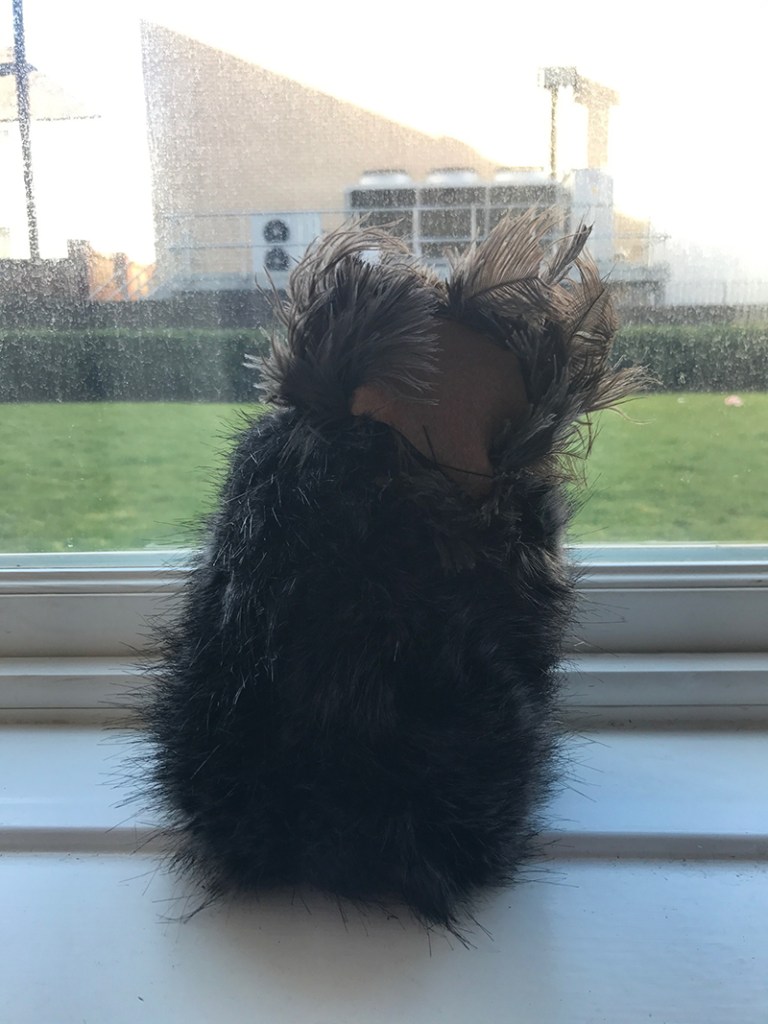
vibrating animal (2018)
This little adorable piece is called ‘vibrating animal’, made with fur and feathers with a piece of leather from my wallet with a vibrating motor inside. While researching sound, voice and gender in coursework back then, I tested how to mute vibration. The overall shape is meant to look like a weird animal inspired by a poem by Else Lasker-Schüler.
Lovesong (1943)
Else Lasker-SchülerCome to me in the night – we’ll sleep, twined close, held hard.
I’m all alone, awake, so very tired.
Long before dawn, the song of some strange bird:
With me, and with itself, my dream still sparred.
Flowers are blossoming where waters spring,
Your eyes lend immortelles their colouring…
Come to me in the night, be shod with seven stars,
Be swathed in love, come late into my tent.
Moons climb aloft from heaven’s dusty coffers.
Like two rare beasts we’ll sleep the sleep of lovers
In the high pass behind the firmament.1Ein Liebeslied (1943)
Komm zu mir in der Nacht – wir schlafen eng verschlungen.
Müde bin ich sehr, vom Wachen einsam.
Ein fremder Vogel hat in dunkler Frühe schon gesungen,
Als noch mein Traum mit sich und mir gerungen.Es öffnen Blumen sich vor allen Quellen
und färben sich mit deiner Augen Immortellen …Komm zu mir in der Nacht auf Siebensternenschuhen
In Liebe eingehüllt spät in mein Zelt.
Es steigen Monde aus verstaubten Himmelstruhen.Wir wollen wie zwei seltene Tiere liebesruhen
Im hohen Rohre hinter dieser Welt.2연가 (1943)
엘저 라스키 쉴러밤에 오시오 – 우리 함께 꼭 붙어 잡시다.
깨어 있으니 외로움에 몹시 피곤하구려.
어두운 새벽 낯선 새 한마리 노래하는데,
꿈은 아직 제 자신과, 또 나와 씨름하고 있었고.꽃은 당신의 눈 같은 색으로
모든 봄이 오기 전에 피어나는데…일곱 개의 별로 된 신을 신고 밤에 오시오,
사랑을 내 장막으로 늦도록 둘러쌉시다.
달들이 하늘의 탁한 몸통에서 떠오른다오.두 마리의 희귀한 동물처럼 조용히 사랑합시다,
이 세상 뒤 키 큰 갈대숲에서.3- https://www.timothyades.com/else-lasker-schuler-1869-1945-lovesong/ ↩︎
- https://www.deutschelyrik.de/ein-liebeslied-1943.html ↩︎
- 슬픔에게 언어를 주자 – 세계 여성 시인선 (2016), 아티초크./ Let’s give sadness a language – Anthology of the works by world women poets (2016), Artichoke. ↩︎
-
240308
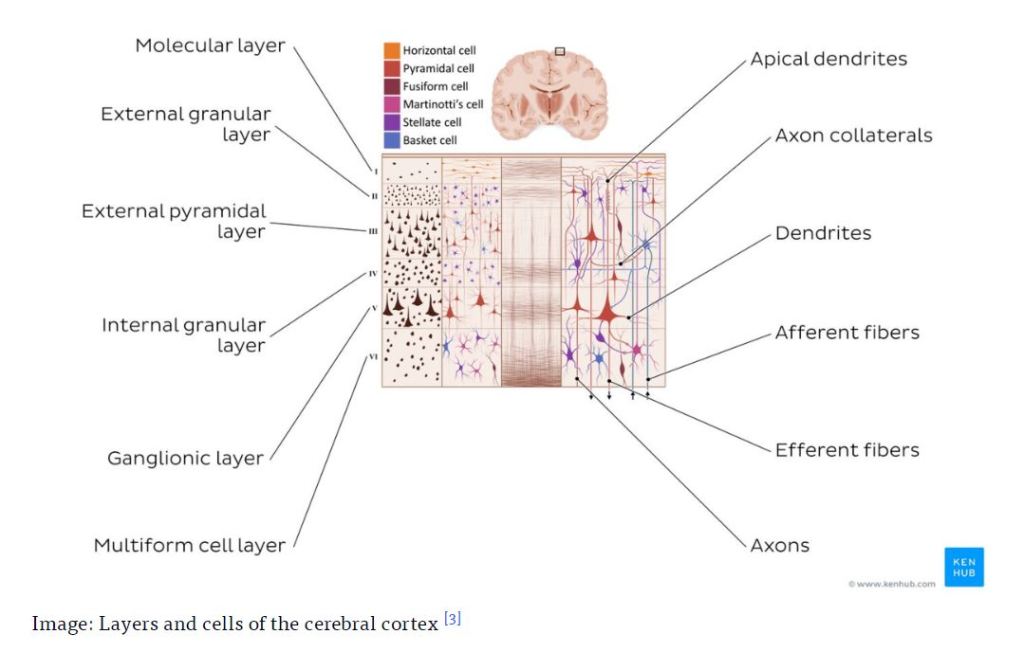
Layers and cells of the cerebral cortex image – © Kenhub https://www.kenhub.com/en/library/anatomy/cerebral-cortex (from: https://www.physio-pedia.com/Cerebral_Cortex)
-
240220
-
240124
-
snowy day walking
“(…) While I’m trying to make the most of it despite of the rough patch, time quickly disappears behind the scenes. Even though I took my quickest steps to recover from the stagnant moments of worrying and procrastinating, when I looked back, the time seemed to have already gone by so far away. No matter how many times I checked and corrected it, my clock was ticking slowly compared to many other people who were vaguely referred to as normal. Meanwhile, I sometimes woke up in the morning and forgot how to walk. Likewise, I frequently became sensitive to the beginning of everything and stopped to restart all over again.
On a snowy day, everyone walks at the same pace as me. My current state and the landscape of the world I think of can be expressed in this sentence: On a beautiful snowy day, there is a white light piled up on the cathedral spire, and people who always seem to run at Mach speeds are walking slowly, all at the same speed, as if they are leisurely hanging around for nothing. I feel like I am living a life at an unrealistic pace that exists in reality in that way. And I decided to accept that slowness to some extent and make up for it. If you take one step at a time, you can soon walk. If you keep walking, one day you will reach somewhere you want to go. (…)”- This piece is extracted and slightly revised for translation from an article I wrote in the winter of 2012, for Contemporary Art Studio class, summering up works such as ‘Tears and Saints, ‘A pretty flower withers and the ugly process will be laughed at’1, and so on.
- This tile was quoted from a lyrics of a song by Sheena Ringo’s ‘Izonshou(依存症, I am an addict)’, the quoted part in English: “(…)Is being played with could be also a beautiful thing as a state? / No, a pretty flower withers, and the ugly process will be laughed. / Always.”, in original text: “翻弄されているということは 状態として美しいでしょうか/いいえ 綺麗な花は枯れ 醜い過程が嘲笑(わら)うのです/…何時の日も” ↩︎
-
I speak imagery words for us but it is written for money – type “\”
From the video work I made in 2018, HOME, I named the climax sequence in the middle “backslash” as the symbol type. I used punctuation marks and etc. with brackets to symbolise each scene to speak without words in the project – such as “ . ” : to illustrate from the moon to the dot on our minds, or “ _ ” : to think about what would be under the score. And just now I found out I cannot type backslash with my Korean keyboard or even if I can do, in some cases, it will be shown as the symbol with two lines on big W, which refer to Korean currency ‘won’. As in many American cartoons that uses dollar sign to refer to a blind mind for money and capitalism, it is used just the same way in Korea. I guess it is a sort of an universal and common visual method everywhere doing so using their own currency marks. Anyway, as to speak, when I was trying to speak in imagery words to describe what happens (in the video) and what happened (to me before) it would be shown in money somewhere else perhaps.
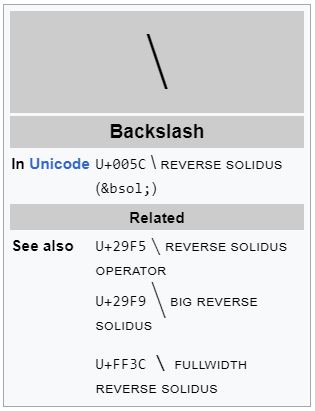
“A Problem for Other Spaces and the Backslash in Korean Standard Computer Keyboard” by Kuk Kim https://jesk.or.kr/archive/detail/62
from JESK (Journal of the Ergonomics Society of Korea), 2017Type “\” and see where you are now.
-
260618
HOME title & intro test
2018.06.26from Making HOME
-
The Heart of Holding a Bird in Hands
The heart of holding a bird in hands
These words and the concept are quoted from the book The History of One’s Life (2022) by Shin, Hyung-chul. In this book, he reads and interprets poems from various times and places while suggesting relatively freer analysis and expanding appreciation of poetry. The opening poem is by Bertolt Brecht, To Be Read in the Morning and at Night (1937)1.
My love
Has told me
That he needs me.
That’s why
I take good care of myself
Watch out where I’m going and
Fear that any drop of rain
Might kill me.2The author Shin extracts the concept of ‘careful mind’ from this piece, juxtaposing Shakespeare’s Sonnet XXII3. Then, from the translated word ‘careful mind’ in Korean, the imagery idea of ‘the heart of holding a bird in hands’ comes out by deconstructing the structure of Chinese characters that consist of a part of the words in Korean. This is a uniquely sensational and genuinely interesting part when you understand Korean, English and the structure of Chinese characters. Literature, translation and a reader having multiple languages in their brain produce organismic passages in between languages, often inadvertently. Such passages sometimes lead to rather unconventional relations in terms of interpretation, as the birds come from carefulness. Translation on the other hand, often makes space while altering a particular nature of the original. For example, in the Korean version of the poem, readers cannot determine the gender of who said ‘I need you’. Then, there is more room in between the meaning of words, especially for some people who haven’t been there originally.
On the contrary, if someone wants to find details from the passages, the original could release more hints. Judging by the personal pronoun based on sex in the original poem and researching the fact that the piece derived from a letter, the author figures out who loved whom and who needed whom, amongst Ruth Berlau, a lover, and Brecht, who needed her. From this old gossip preserved in the luminous long life of literature, the author reminds himself of another type of relationship that would fit in the imbalance of necessity and love which is parental. And he weaves the love with the ‘careful mind’ into his history.
“(…) What I learned from the poet is to be careful about myself. When a child is born, parents must treat themselves (not just the child) like a bird. Holding a bird with your hand is both protecting the bird with your hands and protecting the bird from your hands. I must protect my life from myself as from anything else. Ultimately, this is about protecting the child’s life. Because, it is about protecting the person who protects the child.
(…)(…)(…)
I love you and you need me. The opposite will not hold true. You could call your feelings for me, love, but no matter what you call it, it will be different from what I feel for you. I lived as someone’s child for 45 years and as someone’s father for only nine months, but in those nine months, I realised the difference between the two. You’ve already taught me that, so your work for me is done. I will do the love, and you just use me. I never had a father. So, my mother couldn’t even die because she had to do the work for two people. Like your grandmother, I will be careful. I will prepare myself morning and night. Even raindrops will be afraid. Therefore, I will not die. Even if I die, I won’t die.”4
I think it is relatively unusual to see such strong expressions of paternal love in Korean essays. This sincere and solemn confession of love could be felt unexpectedly intense, especially in a culture deeply influenced by Confucianism where the obliged familial affection towards up. Because I am from such background, I felt strongly impressed along with a sense of freedom. So I tried to adapt this sense of holding a bird to any other relationships in my history. How wonderful when we treat ourselves as a bird in each other’s hands. I feel, I almost always try to take such an attitude too much so it makes me fail to grab hard. Nonetheless, I wanted you to be safe in my hands, I wouldn’t drop you carelessly. But I didn’t want you to struggle when you wanted to fly out of my hands. I wanted to let you fly and I knew you would do that for me too. I’ll just try to keep remembering the way we hold our birds.
Shu Qi, a Taiwanese actress once explicit this careful mind of letting the bird go in her own words. I quote her words using double translation from her original5.
“Even if you pour hot water into tea once gets cold, it is no longer the original taste. Even if you catch the person who left you, it is no longer the same as before. Even if you recall the feelings that have passed, it is not the original feeling of love. Slowly, it will all fade away and become more and more meaningless. It is enough to cherish them when they are by your side and to wish them blessings after they leave. On the journey of life, no one is obliged to be with you until the end.”
In every sense, this sentiment recalls a part of wisdom in those Buddha’s last words. I do not know how many translations and revisions these words have been through in the long journey from the original. But after all, it is never we don’t know about, in any language.
Ananda,
Do not mourn
Do not sigh
We’re bound to break up with everything we love and like
Everything is bound to disappear and change
Ananda,
What was born, existed and was formed
All such things are bound to break
You cannot say, ‘Do not break down’
It cannot happen
***
역사(役事)를하노라고 땅을파다가 커다란돌을하나 끄집어내여놓고보니 도모지어데서인가 본듯한생각이들게 모양이생겼는데 목도(木徒)들이 그것을메고나가드니 어데다갖다버리고온모양이길래 쫓아나가보니 위험(危險)하기짝이없는 큰길가드라.
그날밤에 한소나기하얐으니 필시(必是)그돌이깨끗이씻겼을터인데 그이튿날가보니까 변괴(變怪)로다 간데온데없드라. 어떤돌이와서 그돌을업어갔을까 나는참이런처량(悽凉)한생각에서아래와같은작문(作文)을지였도다.
「내가 그다지 사랑하든 그대여 내한평생(平生)에 차마 그대를 잊을수없소이다. 내차례에 못올사랑인줄은 알면서도 나혼자는 꾸준히생각하리다. 자그러면 내내어여쁘소서」
어떤돌이 내얼골을 물끄러미 치여다보는것만같아서 이런시(詩)는그만찢어버리고싶드라
(이런 시(詩), 〈가톨릭청년〉, 1933.7.)6“While digging in the ground to do some work, I pulled out a large stone and found it had a shape that made me think I had seen it somewhere. As the workers carried it out, I thought that it must have been thrown away somewhere, so I chased it out and found that it was on a very dangerous main road.
There was a heavy shower that night, so the stone must have been washed clean, but when I went there the next day, how strange, it was nowhere to be found. What kind of stone came and carried away that stone? It was with such pitiful thoughts that I wrote the following.
You, who I love that much. I cannot possibly forget you in my lifetime. Even though I know that you are the love that will not come in my turn, I will continue to think about it alone. Well, then, you stay beautiful forever.
It feels like a stone is staring at my face, it makes me want to tear up this kind of poetry.”
– Yi, Sang This Kind of Poetry (1933)
This pitiful man hoped ‘you’ to last forever, although it cannot happen. But the hope may be a more vicious thing to the young poet in the upheaval of history in the early 20th century, equally to a young poet on the Mirabeau Bridge who felt wildly looking at the other edge of the continent. Guillaume Apollinaire left words about what he felt for Marie Laurencin overly monumentalising words like any heartbroken people.7 He wrote that hope is violent and life is slow. I remember when my life was slower when I uttered the word hope, it sounded too strong, yet the actual thing in my hands was frail. I regretted that I had such a hope. But now it is felt differently. Hope may be essentially shallow, unstable and fragile. It is fierce and persistent but may inevitably be vulnerable by its innate nature. Like anything else, it may delicately change its form. It may have had a different name, different eyes or different places. I think, to me, it usually was in a shape of a person but it may be born as a different being now. The unbreakable cannot happen but it may have still remained same in a way. In any form or any time it will always be my hope. And I will hold it in my hands like a bird with my careful mind.
- https://de.wikipedia.org/wiki/Morgens_und_abends_zu_lesen ↩︎
- https://allpoetry.com/To-Be-Read-in-the-Morning-and-at-Night ↩︎
- “O! therefore, love, be of thyself so wary / As I, not for myself, but for thee will; / Bearing thy heart, which I will keep so chary / As tender nurse her babe from faring ill.” (https://shakespeares-sonnets.com/sonnet/22) ↩︎
- Shin, Hyung-chul, The History of One’s Life (2022), Nanda, Prologue: ‘Careful mind’, about the heart of holding a bird in hands. in original text: 신형철 『인생의 역사』(2022), 난다, 프롤로그: 조심, 손으로 새를 쥐는 마음에 대하여 ↩︎
- “茶凉了,就别再续了,再续,也不是原来的味道了;人走了,就别再留了,再留下,也不是原来的感觉了;情没了,就别回味了,再回味,也不是原来的心情了。慢慢的都会远,渐渐的都会淡,拥有时,好好珍惜,离开了,默默祝福,人生的旅途,没有人是應該要陪你走到最后的。” on Weibo, 2013.08.14 ↩︎
- https://ko.wikisource.org/wiki/%EC%9D%B4%EB%9F%B0_%EC%8B%9C ↩︎
- https://writing.upenn.edu/library/Apollinaire_Mirabeau.html ↩︎
 singerjung